
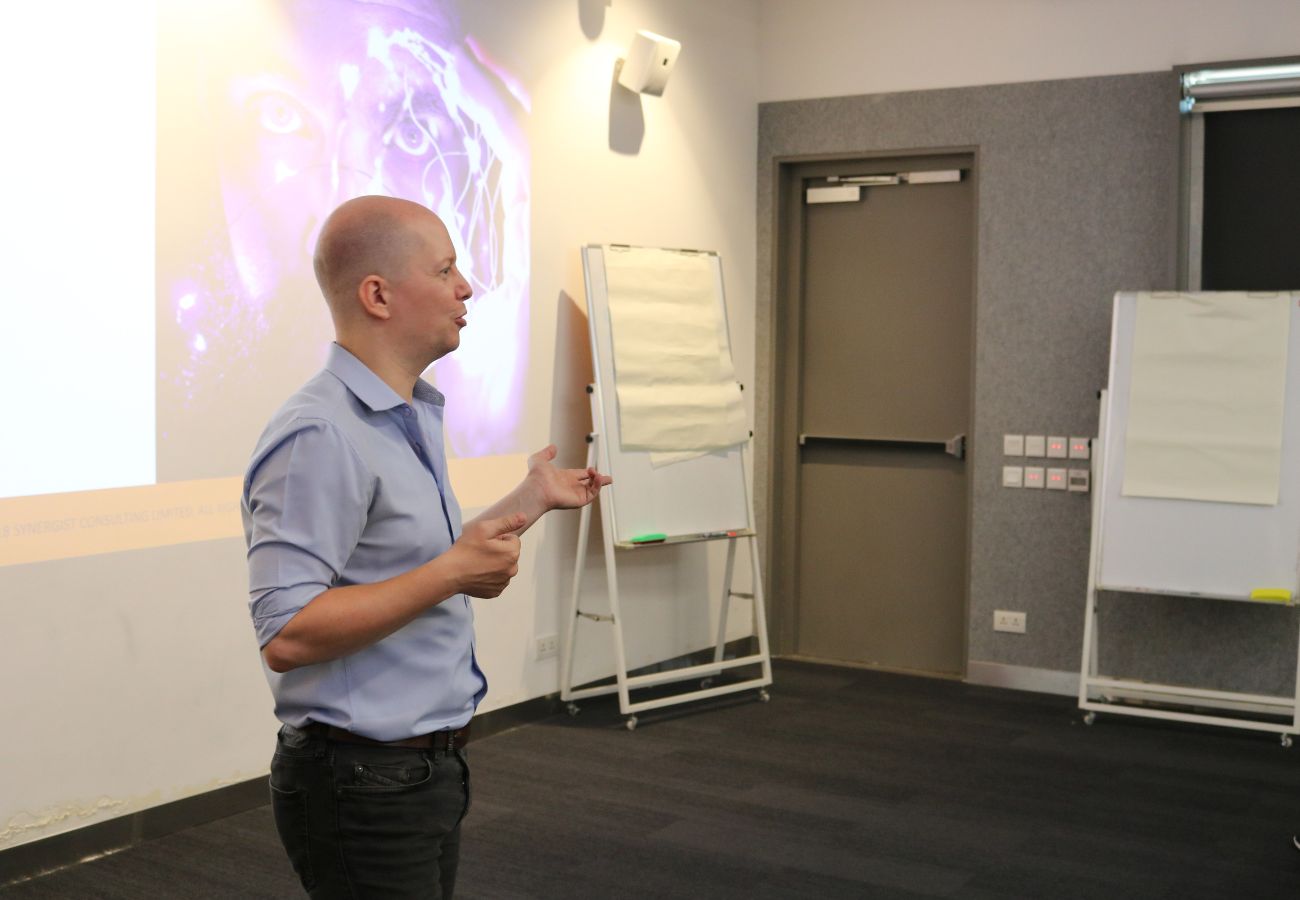
What’s Training Content?
This is somewhat self explanatory, but I believe it’s important to clear this up. While training content is building content to train others, it’s so much more than that.
The way I like to think of training content is as a combination between book and script writing.
- Book Writing?
Building training content is like book writing because you need to build, or, ‘write’ the book which contains the knowledge about the theory and skills people need to learn.
- Script Writing?
Once the book has been written, it’s necessary to explain that information so others can understand it. This is where script writing comes in. Essentially, you’re figuring out how to communicate what needs to be trained so trainees can practice the learned skills in real life.
Related: Read about our Professional Skills Development services
What Can Be Trained?
In terms of what can be trained, there really is no limit to anything. In the context of workplace skills, a few examples of trainable skills could be things like…
| Soft Skills | Hard Skills |
| Communication | Data Analysis |
| Negotiation | Coding |
| Leadership | Social Media |
| Teamwork | Project Management |
| Critical Thinking | Technical Writing |
While many skills can be trained, what changes from skill to skill is how long and difficult they take to learn. These depend on a variety of factors that we’ll discuss in the next section.
Again, while some skills are harder to learn than others, it’s important that employees are provided with opportunities to learn in the first place, as, according to Devlin Peck, 92% of employees think workplace training impacts their job engagement positively.
Why Are Some Skills Harder To Learn?
It shouldn’t come as much of a surprise that certain skills are harder to learn than others. This brings us to reason #1 of why some skills are harder to learn.
- As a simple fact, some skills just contain more knowledge that needs to be understood. As such, more time and effort is required to understand all that information.
- People have strengths and weaknesses. Leadership might come easier to one individual whereas data analysis might make more sense to another. During training sessions, you tend to consider a group of trainees as one, rather than as individuals with unique strengths and weaknesses.
- Finally, people’s motivation for learning can vary depending on the skill they’re being taught. When a person is unmotivated to learn a certain skill, that skill can seem that much harder to grasp.
Why’s It So Hard To Build Great Training Content?
Through my years of experience building training content and facilitating training sessions, there have been a number of reasons why I believe people find it hard to build great training content. Let’s take a look at a few.
Not Understanding Learning
Perhaps the biggest issue I’ve come to see is that most people don’t understand how people learn. Without taking this into account, it’s impossible to build great training content.
The classic story is that of the presentation featuring a deck of Powerpoint slides. While popular around the world, according to Presented, immediately after a 10 minute presentation the audience only remembers 50% of what was said. By the next day, the audience remembers 25%. A week later, the audience only remembers 10%!
That’s why for training content to be great, it’s vital to understand how people learn. This ties in directly with understanding the right method people need for learning. Sometimes all you need is to switch a training methodology and all of a sudden learning becomes that much simpler.
Not Understanding The Trainee’s Level
Even if you understand how people learn, if you don’t take into account their skill level, no amount of good training will help.
What facilitators need to do is strike the right balance between training content that is simple enough for trainees to understand, while being challenging enough to incite growth. This ties into including training content that is a mix between theory and actual activities. Oftentimes one is more dominant, as we often see with Powerpoint presentations.
A Lack Of Time & Money
In a previous section I discussed the fact that some skills are harder to learn than others. That in itself makes building great training content difficult, but on top of that, there’s often a lack of time and money as well.
What tends to happen is that training is usually too rushed, or there’s not enough of a budget to support the creation of great training. Multinational corporations might be able to get over this with the use of both a training team and content building team, but smaller businesses don’t have access to this kind of luxury.
A Lack Of Priority
Finally, some businesses flat out neglect to prioritize training. What tends to happen is companies expect specialists or managers to take care of training, and such a lack of thought results in training content that is always lacking. In a way, a lack of priority is the culmination of the previous three issues around building great training content.
Looking for more information? Learn about How To Connect Training Strategy With Your Company’s Strategy
Do I Have Any Examples Of Great Training Content?
I’ve been building and delivering training content since my time working at Google and Apple two decades ago. However, at the time, a lot of the training content was pre-existing, so I only had to develop and enhance it as time went on.
Today, I build and deliver my own training content. One such example that I’m proud of was done last year for Pizza 4Ps here in Vietnam, where I built leadership skills training for their whole senior management team. However, given that Pizza 4Ps has their own training team, I wanted to ensure that they would be able to take my training content and use it themselves.
This meant that before I even trained the team, I needed to spend a session explaining my training methodologies and how to apply them in their own training. While this took some time to get used to at first, over time the team really began to adopt my methods, and better yet, start to optimize them for themselves! This meant they’d really owned the training content.
How Can I Help?
With 20 years experience, including impactful roles at Google and Apple, I, Thijs van Loon, am here to help. My suite of services as a Skills Development Facilitator has been meticulously designed to propel your team to new heights.
One area of expertise is in Professional Skills Development, which can cover anything from sales training, team management, and train the trainer.
By leveraging training certifications from Google and Apple, in addition to my certifications in NLP and Psych-K, I offer tailored, practical solutions that deliver immediate results to your business. By working together, I can help you empower the individuals in your company and your business at large, whether in Vietnam, Singapore or other locations in Southeast Asia.