
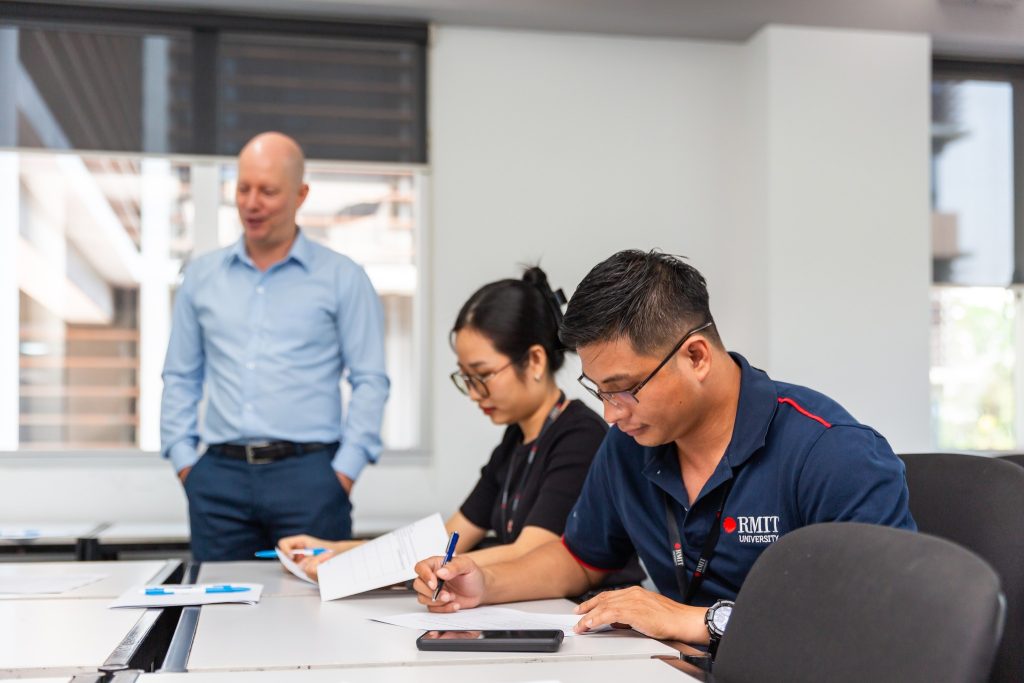
Despite the fact that sales is one of the most important aspects of business success, a lot of companies don’t actually teach their employees how to become better salespeople. This is why sales training is so valuable. In this article, I’d like to take a deep dive into sales training, why it’s important, how it’s taught, before rounding off with a few reasons why companies in Singapore should add sales training to better upskill employees.
What’s Sales Training?
Sales training is training that improves sales skills. Despite the simple definition, there are numerous skills required to become a better salesperson.
→ Sales training addresses each in an attempt to create a more well rounded salesperson.
RELATED: Read about our Professional Skills Development Services

What Are The Benefits Of Sales Training?
Increase Sales Revenue
The most obvious benefit of sales training has to do with the fact that it increases revenue. This is quantifiable on both the individual and company-wide level through two statistics.
Starting off with the individual salesperson, Spotio has reported how the best sales training will improve the performance of an individual by 20%. It shouldn’t come as a surprise that a better salesperson will have a better chance at closing deals and increasing revenue. The second statistic has to do with ROI (return on investment). According to Qwilr, the average ROI for sales training is 353%! This means that for every $1 your company spends on sales training, it receives $4.53 in return.
Sell In Any Condition
While it’s great to talk about the revenue gains made from sales training, there are also numerous functional improvements. By this I mean that sales training improves skills like…
| Communication | Cold calling |
| Confidence | Sales prospecting |
| Time-management | Converting leads |
| Dealing with pushback | Social selling |
| Public speaking | Closing |
Why Don’t Some Companies Provide Sales Training?
1. They Believe It Costs Too Much
One belief many companies tend to hold regarding sales training is the fact that it costs too much. This tends to arise out of an initial inability for those providing the training to guarantee the ROI a company might receive.
However, as I’ve highlighted in the previous section, the average ROI of sales training is extremely high. Moreover, when you consider numbers from Uplead about how the average company spends between $10,000 to $15,000 just to hire someone–compared to the $2,000 spent on sales training–it’s difficult to make the claim that sales training is expensive.
2. What If People Leave?
Companies also hesitate to provide sales training because they worry that those they train will leave, thereby proving a waste of money. However, the problem here isn’t to do with salespeople leaving as a result of training, it’s to do with them leaving as a result of poortraining**.** According to Qwilr, the high turnover rates among salespeople–which can result in the departure of nearly half of account executives–has to do with inadequate sales training.
What Kind Of Sales Training Do Salespeople Need?
As I mentioned in the previous section, salespeople leave as a result of poor training. Therefore, it’s vital to outline how to provide good training. Below I’d like to showcase what I do before training begins and the actual steps of my training.
What Do I Do Before Sales Training?
- Training Needs Analysis
A training needs analysis involves asking questions and interviewing salespeople. This helps me understand what issues salespeople struggle with when it comes to their roles and what skills they’d like to develop during sales training. Once I know this, I can start tailoring training.
- Selling Sales Training
Once a training needs analysis is conducted, it’s important to sell the sales training. This means making sure companies have an understanding of what they’re getting into and why it’s important–Both for the individual salesperson and the whole company.
In order to sell the sales training, I conduct research to better gauge the type of business a company is in and what it is they’re trying to sell.
What Are The Steps For Sales Training?
- Build A Workshop
Now it’s possible to start building a workshop. Depending on the topic and group size, the duration of the sales training is also determined. In total, sales training can range from half a day to three days.
- Reassess Goals
I tend to start training sessions by reassessing goals and having trainees outline what it is they’re hoping to get out of sales training. Asking questions is important, as it’s by asking questions I can figure out what’s missing in their arsenal of sales skills.
- Dig Into What’s Missing
Though seemingly counterintuitive, a key part of my sales training revolves around building out areas in which trainees feel they’re lacking. I do this because once pain points are identified and expanded, it’s possible to start fixing them.
- Role Play
At this point, I have trainees role play just to get a better idea of each individual’s sales skills. Role plays are great because they showcase what happens in real sales situations, and they also allow me to understand how participants connect, build rapport, build trust, etc.
- Four-Step Sales Model
With all this done, I can then present the standard four-step sales model that teaches salespeople how to connect with others, discover what they need, show why their product can help, and close the sale. This model helps them in real-life sales interactions.
RELATED: Read more on Sales Training in Vietnam
What Do You Need For Effective Sales Training In Singapore?
By now it should be obvious that sales training is worth every penny. However, before concluding this article, I’d like to outline a few considerations you should make about sales in Singapore.
The Importance Of Relationships
While fostering good relationships with customers can make or break sales prospects anywhere in the world, in Singapore, there’s much more stress on building personal relationships with customers.
Getting to know your customers, understanding their preferences, and showing genuine interest in them can be the difference between closing and losing a sale. While this takes time, sales training can help you understand how to better oversee the process.
The Importance Of Boundaries
While building relationships is highly valued, there’s an equal importance on respecting another person’s personal space and time. In a way, it’s about balancing between the two, as effectively doing so can lead to greater trust with a customer. Again, sales training teaches this.
The Importance Of Communication
While not specific to Singapore, the importance of communication cannot be overstated. Effective communication serves as the foundation of all sales, and so understanding how to be a better communicator is one way to fast track your success as a salesperson. If you can do this right, it won’t matter to who or where you’re selling.
How I Can Help
With over 18 years of coaching & training experience, including impactful roles at Google and Apple, I, Thijs van Loon, am your Professional Skills Development Facilitator in Asia. My suite of services is meticulously designed to propel your team to new heights.
One area of expertise is in Professional Skills Development, which can cover anything from sales training, team management, and executive coaching.
By leveraging training certifications from Google and Apple, in addition to my certifications in NLP and Psych-K, I offer tailored, practical solutions that deliver immediate results to your business. By working together, I can help you empower the individuals in your company and your business at large, whether this be in Vietnam or other locations in Southeast Asia.
Interested in sales training? Get in touch now.