
Teamwork is the backbone of success not only in the workplace but throughout your day to day life. From increasing productivity, enhancing workplace morale, to fostering learning and growth, there are many benefits to working well with others. Unfortunately, poor communication, micromanaging, and being presumptuous are common pitfalls that hinder effective teamwork building. To prevent that, read on to find out how to create a culture of teamwork in the office.
What’s The Meaning Of Good Teamwork?
In my eyes, teamwork means collaborating effectively by communicating openly, respecting diverse perspectives, and contributing positively toward shared goals. Let’s break these down.
- Effective communication is fostered by knowing how to build trust. Trust can only be built with the understanding of how to communicate honestly and how to listen.
- In order to respect diverse perspectives, you need to be able to adapt to a variety of work, personality, and cultural styles. No two people are the same and this must be accepted. It’s also important to understand your own perspective, qualities, and pitfalls to maintain a balanced ego.
- Finally, to contribute towards shared goals, it’s crucial to be able to maintain a professional and supportive working environment. The more this is maintained, the better the chances are of achieving those goals. This also creates a culture of confidence where work seems to be completed effortlessly.
Related: Read up on our Professional Skills Development services
What Are The Key Benefits Of Effective Teamwork & Collaboration?
It should come as no surprise that there are numerous benefits to teamwork and collaboration. So much so that according to TeamStage, 99.1% of people want to be part of an organization that nourishes honest communication.
As explained earlier, such communication is a vital component of working well with others. This means that organizations that promote this kind of an ethos are going to have better chances of finding employees who are eager to work for them.
Increase Productivity
With a better understanding of how to work well with others, productivity in an organization increases. The reasons for this are straightforward.
- With improved communication skills, individuals and groups have a clearer understanding of what’s needed to complete a task.
- When individuals respect each other’s differences, it’s possible to come up with creative solutions to problems.
- Finally, productivity never wanes when people know how to work together, as everyone shares similar goals and wants to work collaboratively.
It’s no wonder a Stanford study found that even the mere perception of collaborating with others resulted in participants sticking at a task 64% longer than their solitary peers, whilst also reporting higher engagement levels, lower fatigue levels, and a higher success rate.
Enhance Workplace Morale
Workplace morale is one of the main driving factors behind the success of any business. Just think, if employees are happier where they work, wouldn’t they also be more inclined to work harder, smarter, and with more dedication?
It’s no wonder why then, as per NectarHR, 77.63% consider workplace connection–an offshoot of workplace morale–important or very important in achieving a great company culture. For those interested, business professors Robert E. Quinn and Kim Cameron have created a four-part framework for assessing company culture. It looks like this.
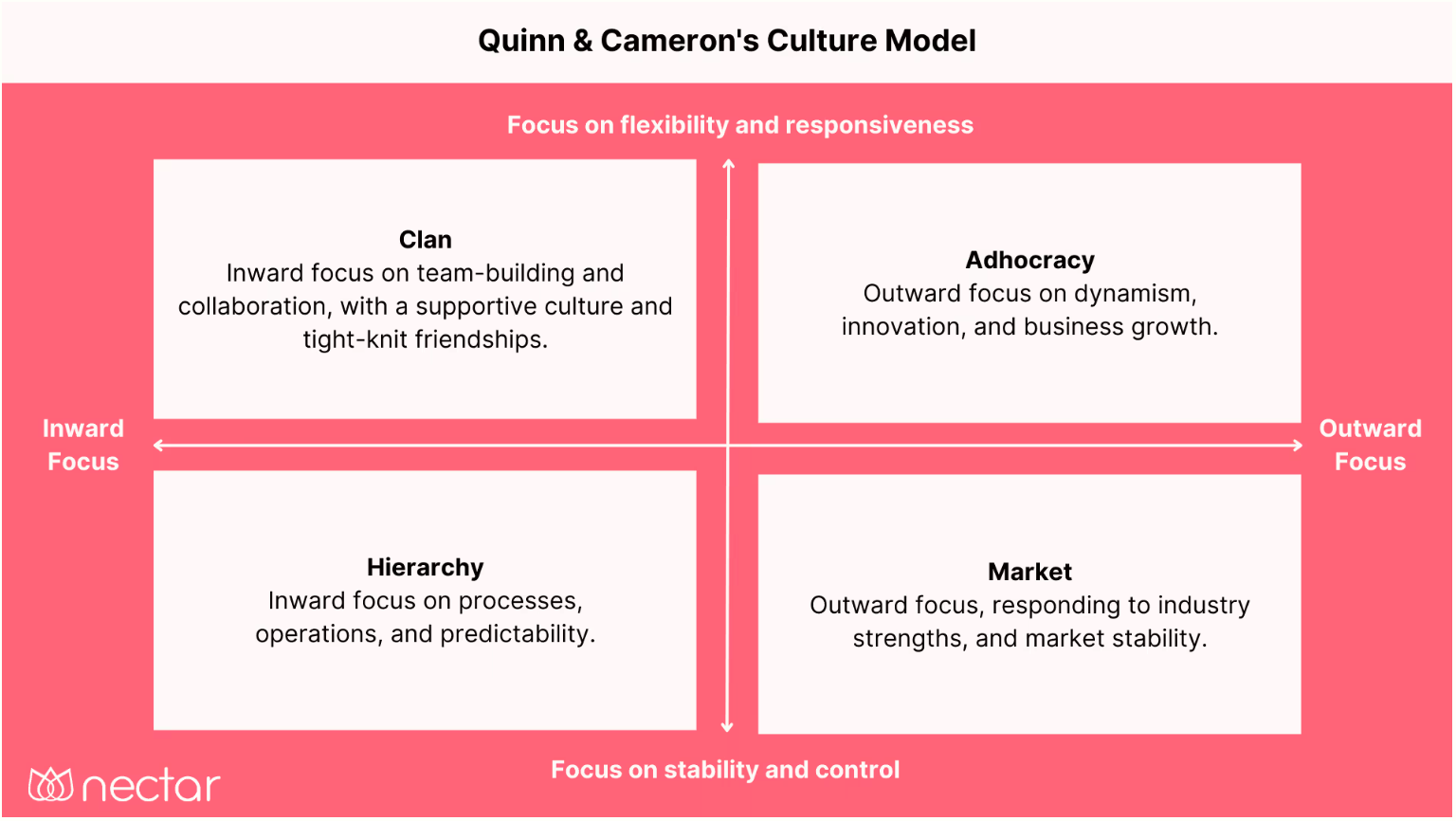
Quinn & Cameron’s Culture Model as per NectarHR
Foster Learning & Growth
The final benefit of teamwork and collaboration has to do with fostering a culture of learning and growth. Again, this isn’t hard to see why. When you’re part of a team that understands how to work together and appreciates the individual strengths and weaknesses of its members, it’s that much easier to create an environment where learning and growth happen all the time.
Learning and growth affect both the company and employee equally. According to LinkedIn Learning, companies with strong learning cultures have a 57% employee retention rate. On the other hand, 7/10 employees say learning improves their sense of connection to an organization, while 8/10 say learning adds purpose to their work.
What Mistakes Do People Make That Prevent Them From Proper Teamwork Building?
Poor Communication
Poor communication is one of the major reasons people have a hard time building good teams. This includes both ends of the spectrum–talking and listening.
A lot of the time, what tends to happen is that individuals focus too much on talking and not enough active listening. As stated in the start of this article, without both talking and listening, trust cannot be built. The numbers back this up, as, according to research published by Forbes, 43% reported trust in leadership was impacted by poor communication and 38% said trust in their team was affected. The numbers only increase for remote workers.
Micromanaging
Anyone who’s been on the receiving end of micromanaging knows how annoying it can be, and that really, it doesn’t increase your work output. This comes back to trust, and the notion that when you’re micromanaged, you don’t feel as if you’re being trusted. This has a harmful effect on how well you work with others.
This is why it’s so important to allow for a certain degree of autonomy. This showcases trust and a respect for other people’s capabilities and boundaries.
Making Assumptions
Perhaps the most fatal mistake you could make that stops you from working well with others is to make assumptions. When you make assumptions you remove the need for communication, you take away another person’s autonomy, and you fail to respect their boundaries. Essentially, you’re putting yourself on a pedestal where you assume you know what’s best for others–This never works.
What ends up happening is a silent detachment opens up between people. A disconnect festers that prevents any real productivity, growth, or a sense of community.
Teamwork falls short without effective training content: Learn How To Understand Trainee Needs And Build Great Training Content
Tips For Demonstrating Team Collaboration At Work
Some tips that can help you demonstrate teamwork at work are to:
- Offer/ask for help when needed
- Actively participate and listen in discussions
- Show appreciation for others’ contributions
- Be open to feedback, understand how to give feedback
- Be willing to compromise for the group’s success
How Do You Speak Up At Work?
For more pointed advice, let’s focus on learning how to speak up at work. An inability to do so is one of the most common issues globally, as, according to research by the Ethics & Compliance Initiative, only 8% of the 75,000+ employees surveyed believe they work in a company with a strong speak-up culture. So how does one start to fix this, particularly in a company that doesn’t foster such open communication?
- Test the waters by asking questions during meetings/discussions. Even questions you might consider ‘stupid’ are worth asking. At this point it’s all about getting an idea of how others respond.
- As you test the waters, you’ll become better at asking smarter and more insightful questions. The more you do this, the more people will connect with you and you’ll become something of an unofficial leader.
- With this reputation you’ll have more opportunities to communicate with others. When you do, listen to their story and show empathy while you’re at it. This builds trust. The more you do this, the more of a trickle-off effect ensues. As a result, more people will begin to have the confidence to speak up.
Comparing Managerial Strategies vs. Employee Team Dynamics
| Focus | Managers | Employees |
| #1 | Empower employees, set clear expectations, and foster an inclusive environment. | Collaborate as equals with other team members. Prioritize building trust, respecting each other’s boundaries, and collaborating towards a shared goal. |
| #2 | Mentor and guide. Recognize what’s needed from team members and be willing to help. Remember not to micromanage. | Respect hierarchy when necessary. Be willing to listen and learn. |
| #3 | Be approachable so employees feel they can speak up. | Maintain a proactive approach, creating a culture of learning and growth. |
The Role of Attitude & Personality in Building Strong Teamwork
Understanding Your Attitude
Regardless of whether you’re a manager or employee, understanding that most people can be divided into two groups helps with learning how to build strong foundations of teamwork.
→ Group #1 are those that Think in Problems (TIP). These people tend to answer questions with ‘yes, but…’. TIP’s focus on what went wrong, how it’s not their fault, and how it should’ve gone differently.
→ Group #2 are those that Think in Solutions (TIS). These people tend to answer questions with ‘yes, and…’. TIS’s focus on acknowledging the reality of a situation and figuring out how to solve that problem.
While everyone has a bit of TIP and TIS characteristics in themselves, it’s better to lean toward the latter. This will encourage you and your colleagues to focus on fixing things.
Understanding Your Personality
Similar to how you can break attitudes down into 2, you can also generalize personalities into introversion and extroversion. For example, while extroverts might naturally gravitate toward open collaboration, introverts may prefer more structured interactions. Understanding your strengths and adapting your approach—without compromising authenticity—can improve teamwork.
Utilizing something like the DISC flow model will provide a means of explaining people’s communication styles. Standing for Dominance, Influence, Steadiness, and Compliance, DISC is a great way to understand how you communicate best.
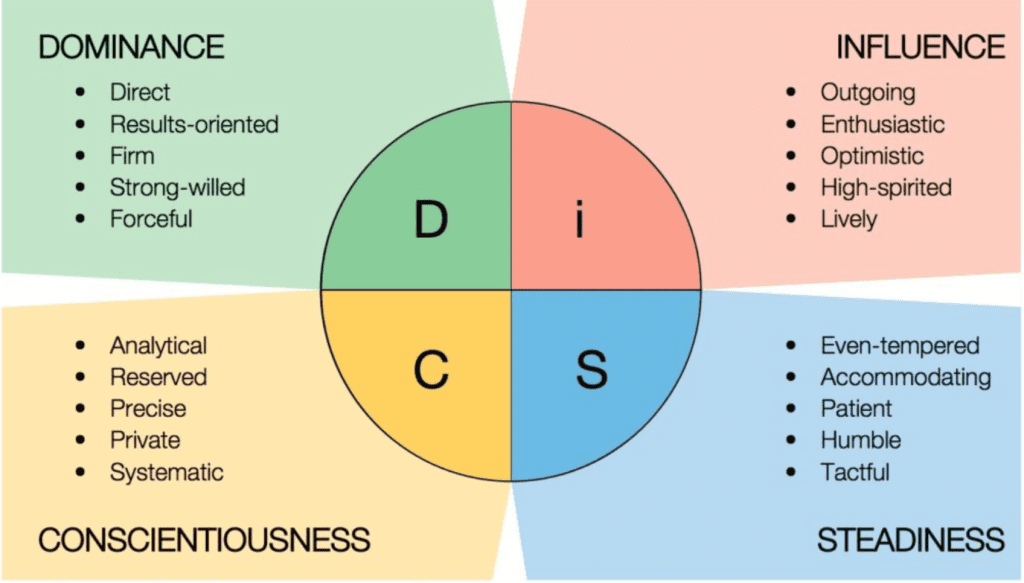
Visual representation of DISC model by Astute
How Do You Work Well With Difficult Colleagues?
One of the barriers to working well with others is dealing with difficult people. When faced with such individuals, it’s important to maintain professionalism and clear communication. Any issues that arise should be addressed early and calmly, and it’s worth trying to find some common ground. If conflicts persist, speaking to managers or HR is a helpful way of finding constructive solutions.
Do Cultural & Generational Differences Affect Teamwork Building?
Cultural Differences
Cultural differences tend to impact communication styles, decision making, and perspectives on hierarchy. As a basic example, collectivist cultures might emphasize harmony more whereas individualistic ones prioritize personal accountability. When moving abroad, having an understanding of such differences can make it that much easier to start working well with others.
Generational Differences
Generational differences tend to manifest in the form of tech preferences or attitudes towards feedback. According to stats on Zippia, 28% of millennials want a quarterly review and 38% want one annually, while 58% of baby boomers prefer the standard annual review.
Reasons for this are due to the fact that millennials are more likely to fear annual reviews, be stressed by them, and believe they’re biased. Understanding this can help you approach giving feedback in the best possible way.
Lessons Learned: Mastering Workplace Collaboration
Throughout the experiences I’ve had so far, I’ve learned that empathy, active listening, and patience are essential for effective collaboration. As a general starting point, it’s much better to assume positive intent and be open to constructive criticism, all the while recognizing that everyone brings unique strengths to the table. This fosters mutual respect and better outcomes.
A Practical Skill For Successful Collaboration
One key skill I’ve also picked up has to do with learning how to wait. By this I mean whenever I encounter a challenge or pressure that makes me emotional or shakes my ego, I need to be patient with my response.
While it’s normal to want to act emotionally/respond immediately, this usually leads to negative outcomes. Instead, by taking a moment to breathe, go for a walk outside, and waiting until the next day, I’ve found my response is 9 out of 10 times much better for myself and any one else involved.
How Can I Help?
With 20 years experience, including impactful roles at Google and Apple, I, Thijs van Loon, am here to help. My suite of services as a Skills Development Facilitator has been meticulously designed to propel your team to new heights.
One area of expertise is in Professional Skills Development, which can cover anything from sales training, team management, and learning how to work well with others.
By leveraging training certifications from Google and Apple, in addition to my certifications in NLP, Psych-K, DISC Flow, and LEGO© Serious Play©, I offer tailored, practical solutions that deliver immediate results to your business. By working together, I can help you empower the individuals in your company and your business at large, whether in Vietnam, Singapore or other locations in Southeast Asia.