
Motivation can be one of the greatest driving factors for getting things done, whether in the workplace or elsewhere. Despite this, many are confused about how it actually works. They aren’t aware of the strategies employees can take to increase personal motivation, such as accountability partnerships, self-monitoring, and habit building–Not to mention the various ways managers can help boost their team’s motivation like giving proper recognition and feedback! This article will take you on a deep-dive into the subject, ensuring you come out the other end with all the tools necessary to ensure workplace success.
Defining Motivation: The Key to Workplace Productivity & Engagement
While you might have a general idea of what motivation is, it helps to have a clear definition. According to VeryWellMind, motivation describes why a person does something, making it the driving force behind human action, persistence, and achievement. On top of this, motivation encompasses the biological, emotional, social, and cognitive forces which activate human behavior.
→ Understanding and harnessing motivation has a number of benefits:
- Increasing efficiency in anything you do, whether personal or professional
- Acting as a buffer against negative habits and behaviors
- Improving your overall sense of self and happiness
Related: Read up on our Professional Skills Development services
Understanding The Psychology Of Motivation: How Does It Work?
In order to properly grasp how motivation works, it’s crucial to take a step back and explore the concepts of willpower and habit. Let’s take a look at how these ideas play off of one another.
Understanding Willpower: The Essential Components of Self-Discipline
Willpower can be defined as one’s ability to resist temptations while pursuing a goal. Within willpower, there are two important concepts to understand.
- Strength
Strength in willpower refers to your immediate capacity to resist temptations and make decisions aligned with your long-term goals. This is important given the fact that you’ll meet many obstacles along the way to achieving a goal. Having a strong will ensures you can overcome said barriers.
- Stamina
Stamina refers to your ability to sustain self-control over extended periods of time, especially when facing continuous challenges. This is vital given that achieving a goal often takes time, and so having the stamina to continue on a given path is crucial if you are to reach that goal.
Understanding The Risk Of Ego Depletion
From what you now know about willpower, you’ll understand that with proper strength and stamina, you’ll be able to stay on the right track–through thick and thin–and ultimately, reach your goals.
However, one factor to be wary of is the idea of ego depletion. Popularized in the 1990s by husband and wife psychologists Roy Baumeister and Dianne Tice, according to Simply Psychology, ego depletion occurs when people exhaust all of their available willpower on one task. As a result, they’re unable to exert the same level of self-control on subsequent, unrelated tasks.
How Do You Protect Yourself Against Ego Depletion?
While ego depletion can hinder your ability to stay resilient over time, there are measures you can take in order to prevent this from happening. This is because willpower, like many things, can be strengthened.
One way of doing this is to engage in activities that require self-discipline. As a natural trickle-on effect, these can enhance self-control in other areas. For instance, consistent physical exercise not only improves fitness but also bolsters the mental resilience needed for tasks like studying or sticking to a strict diet. This cross-domain improvement showcases how willpower functions similarly to a muscle that grows stronger with regular, deliberate practice.
What Are The Practical Implications Of Understanding Willpower?
- Habit Formation
In order to develop new habits, an initial investment of willpower is needed. Once a behavior becomes routine, it starts demanding less conscious effort. This can conserve willpower for other tasks, reducing the risk of ego depletion.
- Self-Regulation
By understanding the fact that willpower is a limited resource, you’re able to strategically plan for the future. This means prioritizing tasks while incorporating breaks to help manage and replenish willpower reserves.
Understanding Habit: How Daily Actions Shape Success
Habits are actions performed on a consistent basis that become automatic over time. These shape the present and future circumstances of your life. However, how do habits work in the first place? This is where The Habit Loop helps provide a deeper understanding. Coined by MIT researchers in the 1990s, the loop is a 3-step process that showcases why you act according to habit.
- Cue
It starts off with a cue (trigger). This is something that initiates the habit, whether it be a location, time of day, preceding action, emotional state, or the presence of certain people. Let’s say the cue in this scenario is waking up in the morning and walking by your coffee machine.
- Routine
Routine refers to the habit itself. While people tend to think of habits as real-time physical acts, they can also be emotional and mental states. Going off the same scenario, the routine would be making coffee and drinking a cup.
- Reward
The reward is the positive (or negative) payoff that occurs from acting according to habit. Having drank that cup of coffee, you may feel a little more awake and energized.
How Does Habit Tie Into Motivation?
Habit’s role in understanding motivation centers around having an awareness of The Habit Loop. Once you’re able to anticipate the rewards (good or bad) associated with a particular habit, you’re able to determine whether that habit has positive or negative effects. Once you have that information, it becomes possible to decide whether a habit is serving you or not.
What Are The Practical Implications Of Understanding Habit?
- Habit Formation
With an understanding of the Habit Loop, you’re able to identify the nature of your habits. This means habits stop becoming automatic behaviours you perform, but actions you can look at from a third-person point of view.
- Behavior Modification
By recognizing the components of existing habits, you can start implementing strategies to disrupt negative patterns. This allows you to establish healthier behaviors in their stead.
How Can The Fogg Behavior Model Help?
Building upon this understanding of willpower, ego depletion, and habits, the Fogg Behavior Model offers a framework for eliciting behavioral change. Developed by Dr. BJ Fogg, this model posits that behavior occurs when three elements converge: Motivation, Ability, and a Prompt (formerly referred to as a Cue/Trigger). Here’s a visual model to help.
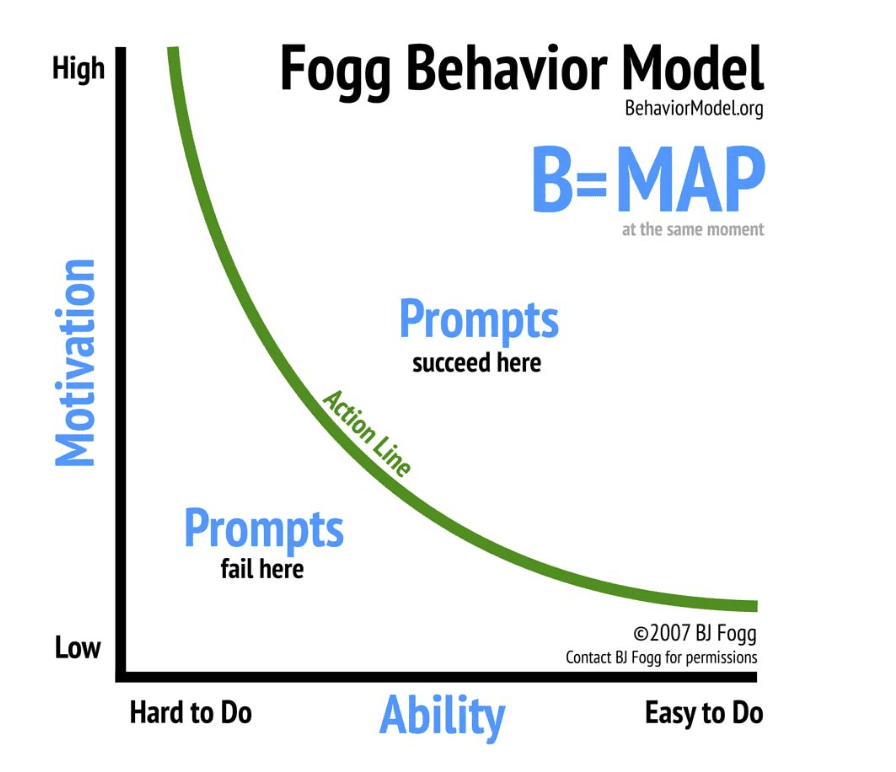
The Fogg Behavior Model, as per Behavior Model
Key Components of the Fogg Behavior Model
- Motivation
Motivation is one’s internal drive to perform a behavior. This can fluctuate based on various factors, including time of day, emotional state, and personal goals.
- Ability
Ability is one’s capacity to perform said behavior. Simplifying the behavior into smaller, manageable actions enhances ability, making it easier to integrate into daily routines.
- Prompt
A prompt is an external cue/trigger that initiates the behavior. Without a prompt, even highly motivated individuals with the ability to perform a behavior may never take action.
What Are The Practical Steps Of Forming New Behaviors?
| Step | Explanation | Example |
| 1 | Clearly define the new habit you wish to adopt. | You decide you want to start weightlifting. You specify this by making a goal of weightlifting 3 times/week. |
| 2 | Break down that habit into its simplest form. Setting overly ambitious goals is a sure-fire way to decrease your chances of sticking to that plan. | You break down your goal of exercising 3 times/week. Let’s say you decide on exercising Monday-Wednesday-Fridays in the evening after work. Each session will last 45 minutes. |
| 3 | Use cues to trigger that behaviour until it becomes a habit. Try integrating it in your pre-existing routine for better chances of getting it to stick. | Start bringing a gym bag with you to work so you can head straight to the gym afterwards. Have a snack an hour or so before finishing work to ensure you have the energy for lifting. |
Measuring Workplace Motivation: 5 Tools and Techniques for Managers
Employee Satisfaction Surveys
Employee satisfaction surveys are a great tool to use to get a grasp of workplace motivation. These anonymous surveys allow employees to express their feelings regarding their roles, work environment, and overall satisfaction, providing valuable information for measuring how they feel about their work. It’s no wonder why the Harvard Business Review still considers them one of the best ways to measure employee engagement.
Work Quality & Productivity
Another simple way to measure employee motivation is to check work quality and productivity. If both are low, there’s a good chance motivation is as well. On the flip side, motivated teams exhibit a 14% increase in productivity, as per Gallup.
Employee Engagement
As a manager, having good observational skills is great for determining employee engagement. Do they seem enthused about projects? Are they participating in meetings? Such questions can help you out.
Absenteeism
Monitoring employee absenteeism is another useful way to gain an understanding of how motivated employees are. While sick days are normal, an increase in unexplained absences and days working from home can serve as an indicator of declining motivation.
Turnover Rates
Worse than absenteeism is when employee turnover rates are high. According to the Corporate Leadership Council, companies with engaged employees experience an 87% lower staff turnover rate. Contrast this with data on Southeast Asia specifically, a study by Aon revealed that 64% of companies reported challenges in hiring or retaining employees in 2024. Such numbers point to lack of engaged, motivated employees in the region.
Teamwork is essential for workplace success: LearnHow To Create Cultures of Teamwork In The Workplace
6 Expert Strategies for Enhancing Motivation
What Can Employees Do?
Accountability Partnerships
According to research by the American Society for Training and Development, the odds of a person completing a task go up by 95% when they have an accountability appointment, essentially, a meeting discussing the task you were meant to complete.
Taking this a step further are accountability partnerships. Why not try working with a colleague or mentor to monitor progress? This can provide external reinforcement and bolster commitment to goals.
Self Monitoring
Self monitoring is great because it puts you in the driver’s seat. Habit tracking apps like Productive and StickK aim to help you build good habits, stick to them, and achieve personal goals.
Practice Mindfulness
Lastly, why not try practicing mindfulness? While meditation may be thought of as something you do for self-development, its benefits in the workplace should not be overlooked. According to a study published on Compare Camp, meditation increased employee productivity by 120%!
What Can Managers Do?
Give Recognition & Feedback
Giving your employees recognition and appreciation for their work is one of the most low cost, high reward means of boosting motivation. Despite this, as per a Gallup analysis, only 3 in 10 U.S. employees strongly agree that in the last seven days they have received recognition or praise for doing good work. As a manager, providing authentic, genuine recognition and feedback is a great way of ensuring employees feel seen.
Understand Work/Life Balance
No matter how motivated an individual may be, without a proper work/life balance they’re sure to experience burnout at some point. According to studies published on Gallup, 1 in 4 employees experience burnout either ‘very often’ or ‘always’. Such a working culture is not conducive to productive, motivated work.
Provide Professional Growth Opportunities
The last thing managers can do to ensure employees feel motivated at work is to provide more than just a paycheck. The reality is, employees nowadays want to feel as if their work has a purpose. Without this, it’s easy for them to lose motivation and begin looking for opportunities elsewhere. As a manager, understanding that you are there to do more than just pay your employees can lead to great workplace success for all.
All About The Comfort, Stretch, and Panic Zones Model
The last tool that can help you understand the delicate nature of motivation is known as the Comfort, Stretch, and Panic Zones model. Whether you’re an unmotivated person needing a boost of motivation, or a highly ambitious individual experiencing burnout, this model can help you determine what you need to do next. It looks something like this.
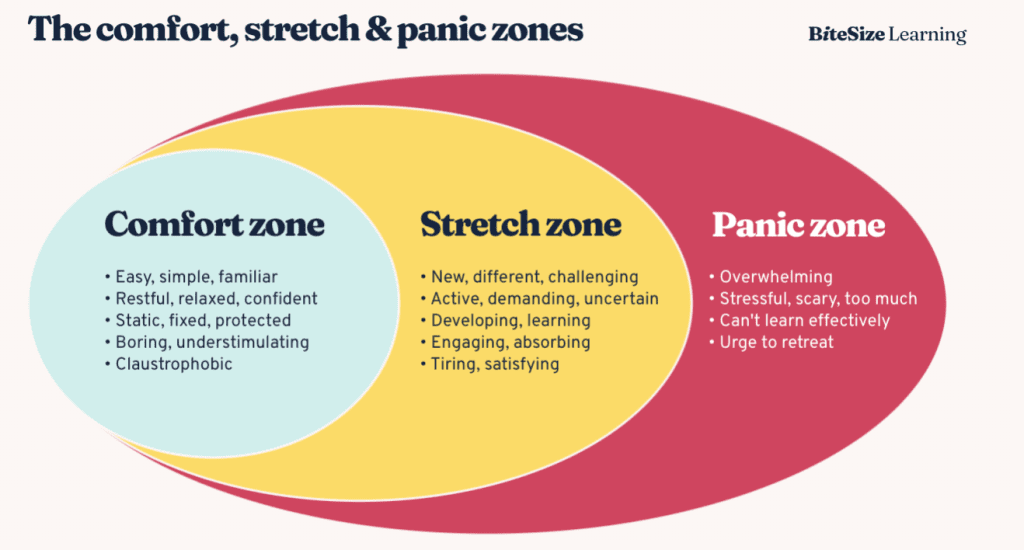
The Comfort, Stretch, and Panic Zones model as per BiteSize Learning
As you can see from the model, the 3 separate zones delineate states where work can either feel comfortable, engaging, or overwhelming. You’re most motivated in the ‘stretch’ zone, where work is challenging enough to keep you stimulated but not so difficult you feel lost. With this framework in my mind, you should be able to recognize what zone you’re in, and how to change that if need be.
How Can I Help?
With 20 years experience, including impactful roles at Google and Apple, I, Thijs van Loon, am here to help. My suite of services as a Skills Development Facilitator has been meticulously designed to propel your team to new heights.
One area of expertise is in Professional Skills Development, which can cover anything from sales training, team management, and improving workplace motivation.
By leveraging training certifications from Google and Apple, in addition to my certifications in NLP, Psych-K, DISC Flow, and LEGO© Serious Play©, I offer tailored, practical solutions that deliver immediate results to your business. By working together, I can help you empower the individuals in your company and your business at large, whether in Vietnam, Singapore or other locations in Southeast Asia.